
DIY Skincare Fails: 3 Homemade Recipes You Should Avoid
Okay, friend, let’s talk about skincare. Specifically, let’s talk about those super tempting DIY skincare recipes floating around the internet. We’ve all been there, scrolling through Pinterest, thinking, “Wow, I can make THAT!” It looks so easy, so natural, so…cheap! But trust me, as someone who’s been down that road, sometimes the most affordable option ends up costing you more in the long run. I’m here to spill the tea on some DIY skincare fails I’ve experienced firsthand and why some homemade recipes are best left to the professionals. Because let’s be real, sometimes a little knowledge is a dangerous thing, especially when it comes to your precious face.
Table of Contents
- DIY Skincare Fails: 3 Homemade Recipes You Should Avoid
- My Own DIY Disaster (So You Don’t Have To!)
- Recipe #1: Lemon Juice Face Mask – Ouch!
- Better Alternative
- Recipe #2: Baking Soda Scrub – Abrasive Alert!
- Better Alternative
- Recipe #3: Cinnamon Face Mask – Spice Overload!
- Better Alternative
- General DIY Skincare Tips & Takeaways
- Ready to level up your skincare game?
We’re going to dive into why some DIY skincare recipes can be more harmful than helpful. We’ll cover specific ingredients to avoid and discuss safer alternatives for achieving that healthy, glowing skin we all crave. I’m not saying all DIY is bad, but it’s crucial to know the risks involved. Think of it like cooking – you wouldn’t just throw random ingredients together without a recipe, right? Skincare is the same!
My Own DIY Disaster (So You Don’t Have To!)
Before we get into the specifics, let me tell you about my own personal DIY skincare disaster. I was convinced I could whip up a miracle acne treatment using lemon juice and baking soda. Seems simple enough, right? Wrong! I mixed it up, applied it to my face, and within minutes, my skin was burning. I washed it off immediately, but the damage was done. I ended up with a bright red, irritated face that took days to calm down. Talk about a #DIYskincarefail! That’s when I learned the hard way that “natural” doesn’t always equal “safe,” and that some ingredients can seriously mess with your skin’s pH balance. Now, I always do my research and err on the side of caution before trying any new homemade skincare concoctions.
Recipe #1: Lemon Juice Face Mask – Ouch!
Lemon juice is often touted as a natural brightener, and its acidity is supposed to help with acne. Sounds good in theory, but here’s the deal: lemon juice is HIGHLY acidic. Its pH is way too low for your skin, which naturally sits around 4.5-5.5. Slathering lemon juice on your face can disrupt your skin’s acid mantle, leading to:
- Irritation and Redness: Like I experienced firsthand, lemon juice can cause significant irritation, especially if you have sensitive skin.
- Sun Sensitivity: Lemon juice makes your skin incredibly sensitive to the sun, increasing your risk of sunburn and hyperpigmentation. Even if it is diluted, you could still be facing sun sensitivities.
- Hyperpigmentation: Ironically, lemon juice can actually cause hyperpigmentation (dark spots) if you’re not careful. It’s a double-edged sword!
Better Alternative
Instead of lemon juice, try using products containing Vitamin C. Vitamin C is a potent antioxidant that can brighten your skin and even out your skin tone without the harsh acidity of lemon juice. Look for serums or creams with a stable form of Vitamin C, like L-ascorbic acid or sodium ascorbyl phosphate.
Recipe #2: Baking Soda Scrub – Abrasive Alert!
Another popular DIY recipe involves using baking soda as an exfoliator. Baking soda is alkaline, with a pH of around 8 or 9. Again, this is way too high for your skin. Using baking soda as a scrub can:
- Disrupt Your Skin’s pH Balance: Just like lemon juice, baking soda can mess with your skin’s natural pH, leading to dryness, irritation, and breakouts.
- Cause Micro-Tears: Baking soda is quite abrasive and can create tiny tears in your skin, making it more vulnerable to infection and inflammation.
- Lead to Sensitivity: Over time, using baking soda as an exfoliator can weaken your skin barrier, making it more sensitive to other products and environmental factors.
Better Alternative
Opt for gentle chemical exfoliants like AHAs (alpha hydroxy acids) or BHAs (beta hydroxy acids). These acids gently dissolve dead skin cells without the harshness of physical scrubs. Lactic acid and glycolic acid are great AHA options, while salicylic acid is a popular BHA choice for acne-prone skin. Always start with a low concentration and gradually increase as your skin tolerates it.
Recipe #3: Cinnamon Face Mask – Spice Overload!
Cinnamon is often used in DIY face masks for its supposed anti-inflammatory and antibacterial properties. However, cinnamon contains compounds that can be irritating to the skin, especially in concentrated amounts. Using cinnamon on your face can:
- Cause Allergic Reactions: Cinnamon is a common allergen and can trigger allergic reactions in some people, leading to redness, itching, and swelling.
- Irritate Sensitive Skin: Even if you’re not allergic, cinnamon can still irritate sensitive skin, causing a burning or tingling sensation.
- Lead to Hyperpigmentation: In some cases, cinnamon can cause post-inflammatory hyperpigmentation, especially in darker skin tones.
Better Alternative
If you’re looking for anti-inflammatory and antibacterial ingredients, try using honey or tea tree oil instead. Honey is a natural humectant, meaning it draws moisture to the skin, and it has antibacterial properties. Tea tree oil is a potent antiseptic that can help fight acne-causing bacteria. Always dilute tea tree oil before applying it to your skin.
General DIY Skincare Tips & Takeaways
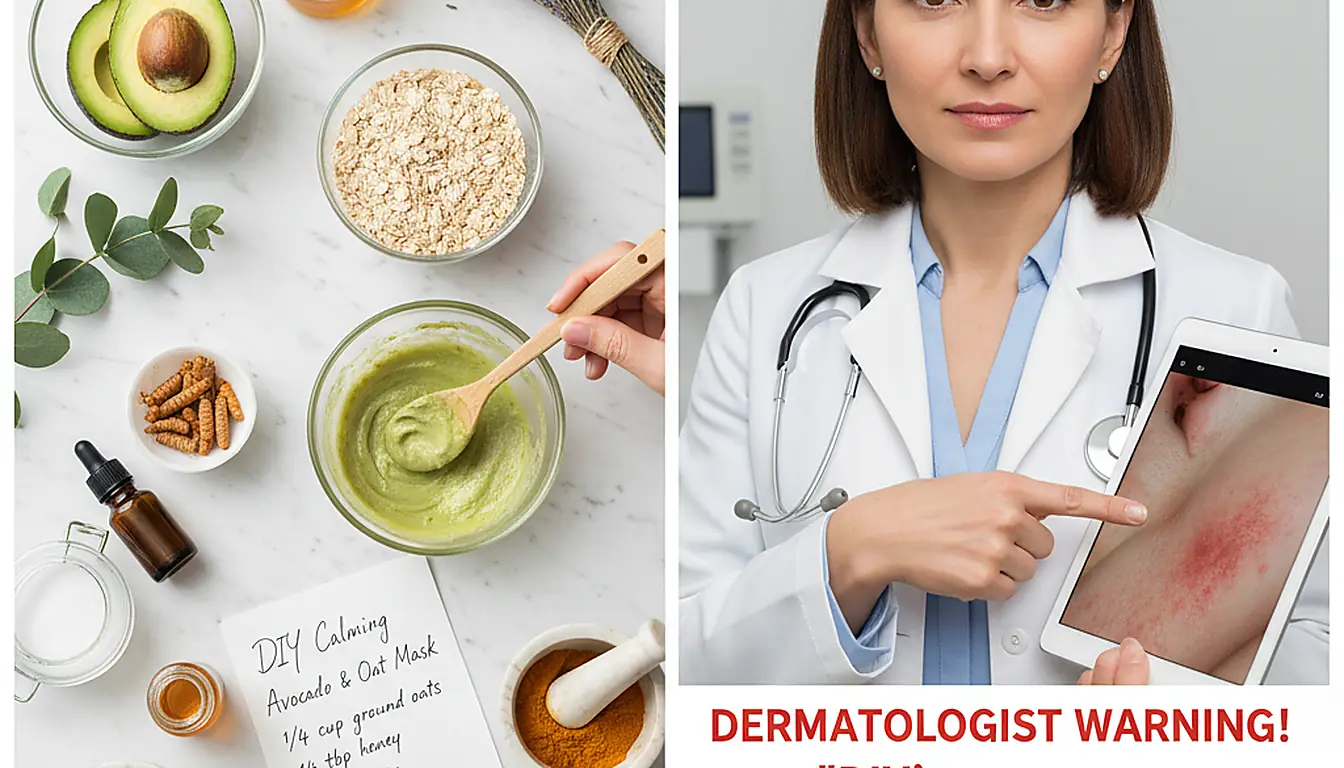
Look, I get the appeal of DIY skincare. It’s fun, creative, and can feel empowering. But before you start whipping up a batch of anything, keep these tips in mind:
Back to the flow—this is the practical bit.
- Do Your Research: Thoroughly research any ingredient you plan to use. Understand its properties, potential side effects, and how it interacts with other ingredients.
- Patch Test: Always do a patch test before applying any new DIY recipe to your entire face. Apply a small amount to a discreet area, like your inner arm, and wait 24-48 hours to see if you have any reaction.
- Start Slow: Don’t overdo it! Start with small amounts of each ingredient and gradually increase as needed.
- Use Fresh, High-Quality Ingredients: Use fresh, high-quality ingredients whenever possible. Avoid using expired or contaminated ingredients.
- Be Realistic: DIY skincare isn’t going to solve all your skin problems overnight. It’s important to have realistic expectations and be patient.
- Know When to See a Professional: If you have persistent skin problems, it’s always best to consult with a dermatologist. They can provide personalized advice and treatment options.
Ultimately, knowing about these common DIY skincare fails helps protect you from the potential harm of poorly chosen homemade recipes. Taking care of your skin should be fun, not a source of stress or damage. Trust your gut, do your research, and don’t be afraid to ditch a recipe if it doesn’t feel right for you.
Ready to level up your skincare game?
Instead of risking it with unreliable homemade skincare recipes, why not check out some professionally formulated products? I’ve had great experiences with [insert brand] and [insert brand] – they both offer lines specifically designed for sensitive skin. Remember, your skin is worth investing in!
Stay safe, stay informed, and happy skincare-ing! What’s the worst DIY skincare disaster you’ve ever experienced? Share your stories in the comments below!
Key Takeaways
- DIY Skincare Fails: 3 Homemade Recipes You Should Avoid
- My Own DIY Disaster (So You Don’t Have To!)
- Recipe #1: Lemon Juice Face Mask – Ouch!
- Better Alternative
- Recipe #2: Baking Soda Scrub – Abrasive Alert!