
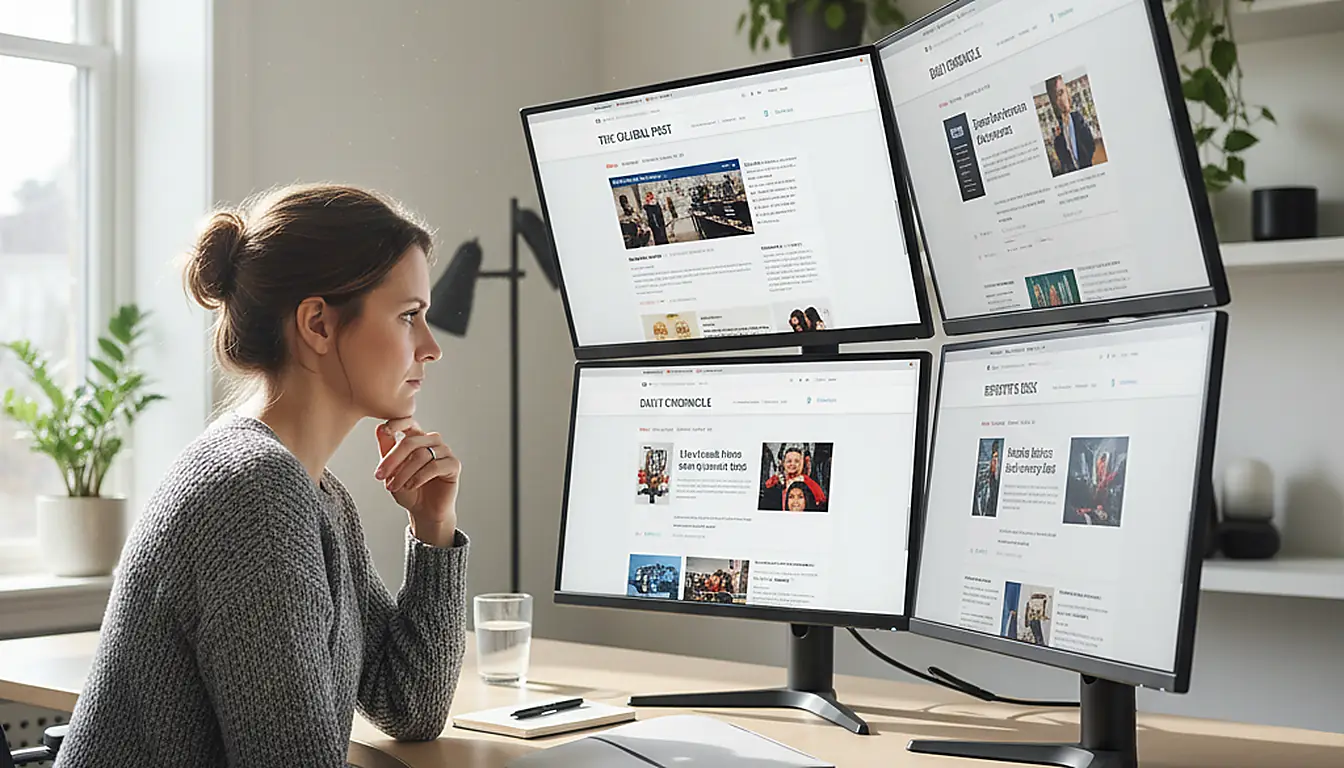
Escape the Information Bubble: It’s Easier Than You Think!
Okay, friends, let’s talk. In this crazy world of 24/7 news cycles and social media echo chambers, it’s getting harder and harder to know what’s actually true, right? I mean, escaping the information bubble feels like trying to find your keys in a dark room – frustrating and seemingly impossible. I totally get it! I’ve been there, endlessly scrolling, feeling more confused and anxious than informed.
Table of Contents
- Escape the Information Bubble: It’s Easier Than You Think!
- My Go-To Sources for High-Quality, Unbiased News
- 1. Reuters and Associated Press (AP)
- 2. BBC News
- 3. The Wall Street Journal (News Section)
- 4. PolitiFact and Snopes
- 5. NPR (National Public Radio)
- Tips for Staying Informed Without Losing Your Mind
- The Takeaway: You Can Escape the Information Bubble!
A few years ago, I found myself knee-deep in this exact situation. There was *so* much conflicting information about… well, everything! Politics, health, even what kind of coffee was “best” (apparently, that’s a debate!). It was mentally exhausting. I felt like I was constantly being bombarded with opinions disguised as facts, and my critical thinking skills were starting to atrophy. That’s when I realized I needed to make a conscious effort to diversify my news sources and actively seek out unbiased reporting.
So, how did I do it? It wasn’t overnight, believe me. It took some work, some experimentation, and a whole lot of patience. But I discovered some amazing resources and strategies that helped me break free from the echo chamber and start forming my own, well-informed opinions. And guess what? I’m going to share them with you!Why It’s Crucial to Diversify Your News Sources
Think of your news intake like your diet. You wouldn’t just eat one type of food all the time, would you? You need a variety of nutrients to stay healthy. The same goes for information! Consuming only one perspective, or worse, being stuck in an algorithm-driven echo chamber, is like only eating sugary cereal. It might taste good in the moment, but it’s not good for you in the long run.
Here’s why diversifying your news sources is so important:
- It broadens your perspective: Exposure to different viewpoints helps you understand complex issues from multiple angles.
- It challenges your assumptions: It forces you to question your own beliefs and biases, which is essential for intellectual growth.
- It helps you identify bias: By comparing different reports on the same event, you can start to recognize the subtle ways in which media outlets can slant their coverage.
- It empowers you to form your own opinions: Instead of passively accepting what you’re told, you can actively evaluate the information and arrive at your own conclusions.
- It reduces anxiety: Honestly, being better informed, even about difficult things, often reduces anxiety more than avoiding the news altogether. It’s the feeling of helplessness that makes things worse.
My Go-To Sources for High-Quality, Unbiased News
Alright, let’s get down to the nitty-gritty. These are some of the sources I’ve found to be consistently reliable and committed to objective journalism. Of course, no news source is *perfectly* unbiased, but these come pretty darn close.
1. Reuters and Associated Press (AP)
These are wire services. They are the backbone of news reporting for many other outlets. They focus on delivering factual accounts of events as they happen. Their business model depends on accuracy and speed, not sensationalism. This is one of the best ways to fight misinformation.
- Why I love them: They prioritize facts over opinion. Their reporting is generally very straightforward and avoids sensationalism.
- Things to keep in mind: Because they focus on raw facts, you might need to consult other sources for context and analysis.
2. BBC News
The British Broadcasting Corporation (BBC) is a public service broadcaster. They adhere to strict journalistic standards and have a global network of correspondents. This can help you get more international perspectives.
- Why I love them: Their international coverage is excellent, and they have a strong commitment to impartiality.
- Things to keep in mind: While generally unbiased, some argue that the BBC can sometimes reflect a British perspective on global events.
3. The Wall Street Journal (News Section)
I know, I know. It’s known for its business coverage. However, the news section of the WSJ is usually very reliable and committed to presenting information objectively. Just stick to the news reporting, not the opinion pieces.
- Why I love them: High-quality journalism with a focus on accuracy.
- Things to keep in mind: Can have a paywall, but often worth it for the quality of reporting.
4. PolitiFact and Snopes
These are fact-checking websites. They dedicate themselves to verifying the accuracy of claims made by politicians, media outlets, and online sources. They are great resources to use for media literacy.
- Why I love them: They provide evidence-based assessments of claims, helping you separate fact from fiction.
- Things to keep in mind: They primarily focus on verifying specific claims, rather than providing comprehensive news coverage.
5. NPR (National Public Radio)

This small shift made a visible difference.
NPR is a non-profit media organization. They are committed to in-depth reporting and thoughtful analysis. This can also provide a great critical analysis.
- Why I love them: They offer a wide range of programming, from news and analysis to cultural features.
- Things to keep in mind: NPR has been accused of having a slight liberal bias by some.
Tips for Staying Informed Without Losing Your Mind
Okay, now that you have some solid sources, here are a few tips to help you stay informed without getting overwhelmed or sucked into the negativity vortex.
- Limit your news consumption: Set aside specific times of day to check the news, and avoid constantly refreshing your feeds. Trust me, the world won’t end if you don’t know every breaking development the instant it happens.
- Be mindful of your social media feeds: Unfollow or mute accounts that consistently spread misinformation or promote negativity. Curate your feed to include a diverse range of voices and perspectives.
- Read beyond the headlines: Take the time to read the full article, not just the headline. Headlines are often designed to grab attention, and they can be misleading.
- Cross-check information: If you see a claim that seems suspicious, verify it with multiple sources before sharing it.
- Take breaks: It’s okay to unplug from the news every now and then. Go for a walk, read a book, spend time with loved ones. Give your brain a chance to rest and recharge.
The Takeaway: You Can Escape the Information Bubble!
Escaping the information bubble isn’t about avoiding the news altogether. It’s about being a more conscious and critical consumer of information. It’s about taking control of your news intake and actively seeking out diverse perspectives. It’s about empowering yourself to form your own opinions based on facts, not fear or manipulation.
It’s a journey, not a destination. There’ll be times when you slip back into old habits. Times when you feel overwhelmed and tempted to just throw your hands up in the air and give up. But don’t! Keep experimenting, keep learning, and keep challenging yourself. The more you practice these strategies, the easier it will become to navigate the complex and often confusing world of news and information.
And remember, you’re not alone in this! We’re all in this together, trying to make sense of the world around us. So, let’s support each other, share resources, and keep the conversation going. Together, we can create a more informed and engaged citizenry.
Now, go forth and be informed! And maybe take a walk in nature afterward. Your brain will thank you. 😊
Key Takeaways
- Escape the Information Bubble: It’s Easier Than You Think!
- My Go-To Sources for High-Quality, Unbiased News
- 1. Reuters and Associated Press (AP)
- 2. BBC News
- 3. The Wall Street Journal (News Section)