Is Yoga Really Strength Training? The Surprising Truth
Okay, friends, let’s get real. We’ve all been there, right? Scrolling through Instagram, seeing those impossibly bendy yogis and thinking, “Wow, that’s…relaxing.” But is it *really* just relaxation? Or is there something more to it? I’ve been practicing yoga on and off for years, and I’ve always wondered: Is yoga really strength training? Like, can it *actually* build muscle and power?
Table of Contents
- Is Yoga Really Strength Training? The Surprising Truth
- My Own ‘Aha’ Moment with Yoga and Strength
- Understanding the Different Styles of Yoga
- So, Which Muscles Does Yoga Target?
- Yoga vs. Traditional Strength Training: A Head-to-Head Comparison
- Benefits of Yoga for Strength:
- Benefits of Traditional Strength Training:
- How to Incorporate Yoga for Strength Building
- My Verdict: Yoga is *Definitely* Strength Training (But…)
- Ready to Give it a Try?
Spoiler alert: the answer is a bit more nuanced than a simple yes or no. And I’m here to unpack it all for you. We’ll dive into the different styles of yoga, the muscles they target, and how yoga stacks up against traditional strength training. Get ready to question everything you thought you knew about downward dog!
My Own ‘Aha’ Moment with Yoga and Strength
Let me tell you a story. A few years back, I was all about the high-intensity workouts. Think CrossFit, running, and lifting heavy things. I felt strong, sure, but I also felt…broken. My joints ached, my muscles were constantly tight, and I was always battling some kind of nagging injury. That’s when I decided to give yoga a serious try. Not just the occasional stretching session, but a dedicated practice.
At first, I was bored. Like, *really* bored. Where was the sweat? The heavy breathing? The feeling of pushing my limits? But I stuck with it. Slowly, I started to notice changes. My flexibility improved, obviously. But more surprisingly, I felt *stronger*. Not in a “I can bench press a car” kind of way, but in a “I can hold a plank for five minutes without collapsing” kind of way. My core felt like it was made of steel, and my balance was better than ever. That’s when the question, Is yoga really strength training?, became so much more important.
That’s when I had my ‘aha’ moment. I realized that yoga, especially certain styles, was actually building strength in a completely different way. It was functional strength, the kind that translates into real-life activities and helps prevent injuries. It made me ask myself if I should incorporate yoga for muscle building into my routine.
Understanding the Different Styles of Yoga
Before we go any further, it’s important to understand that not all yoga is created equal. There are many different styles, each with its own focus and intensity. Some are more about relaxation and flexibility, while others are definitely strength-building. Here’s a quick rundown of a few popular styles:
- Hatha: This is a general term for any type of yoga that teaches physical postures. It’s typically slower-paced and a good starting point for beginners.
- Vinyasa: Also known as “flow yoga,” Vinyasa links movement with breath. It’s more dynamic than Hatha and can be a great cardiovascular workout.
- Ashtanga: This is a rigorous and structured style of yoga that follows a specific sequence of poses. It’s very physically demanding and definitely builds strength.
- Power Yoga: Similar to Ashtanga, Power Yoga is a more modern and less strict style that emphasizes strength and endurance.
- Yin Yoga: This style focuses on holding poses for longer periods of time to target the deep connective tissues. It’s less about strength and more about flexibility and relaxation.
So, Which Muscles Does Yoga Target?
Okay, so we know that some styles of yoga can build strength. But which muscles are actually getting a workout? The answer might surprise you. Yoga engages almost every muscle in your body, but here are a few key areas that get particular attention:
- Core: Think planks, boat pose, and any pose that requires you to stabilize your spine. Yoga is amazing for building core strength, which is essential for everything from good posture to preventing back pain.
- Legs: Warrior poses, lunges, and chair pose are all excellent for strengthening your quads, hamstrings, and glutes.
- Arms and Shoulders: Downward dog, chaturanga (yoga push-up), and side plank are all challenging poses that build strength in your arms, shoulders, and chest.
- Back: Backbends like cobra and bridge pose strengthen the muscles along your spine, improving posture and relieving back pain.
Yoga vs. Traditional Strength Training: A Head-to-Head Comparison
Now, let’s get down to the nitty-gritty. How does yoga stack up against traditional strength training with weights?
Benefits of Yoga for Strength:
- Functional Strength: Yoga builds strength that translates into real-life activities. You’re not just lifting a weight in isolation; you’re using your body weight to build strength in a way that’s more natural and functional.
- Improved Flexibility and Mobility: Yoga increases your range of motion, which can help prevent injuries and improve your overall athletic performance.
- Core Strength and Stability: As mentioned earlier, yoga is fantastic for building core strength, which is the foundation of all movement.
- Mind-Body Connection: Yoga emphasizes the connection between your mind and body, which can improve your awareness, balance, and coordination.
- Reduced Stress: Yoga has been shown to reduce stress, anxiety, and depression, which can have a positive impact on your overall health.
Benefits of Traditional Strength Training:
- Greater Muscle Hypertrophy: Traditional strength training is more effective for building muscle mass (hypertrophy) than yoga.
- Increased Bone Density: Lifting weights can help increase bone density, which is important for preventing osteoporosis.
- Improved Power and Speed: Traditional strength training can improve your power and speed, which is important for athletic performance.
- Targeted Muscle Development: With weights, you can isolate specific muscles and target them for development.
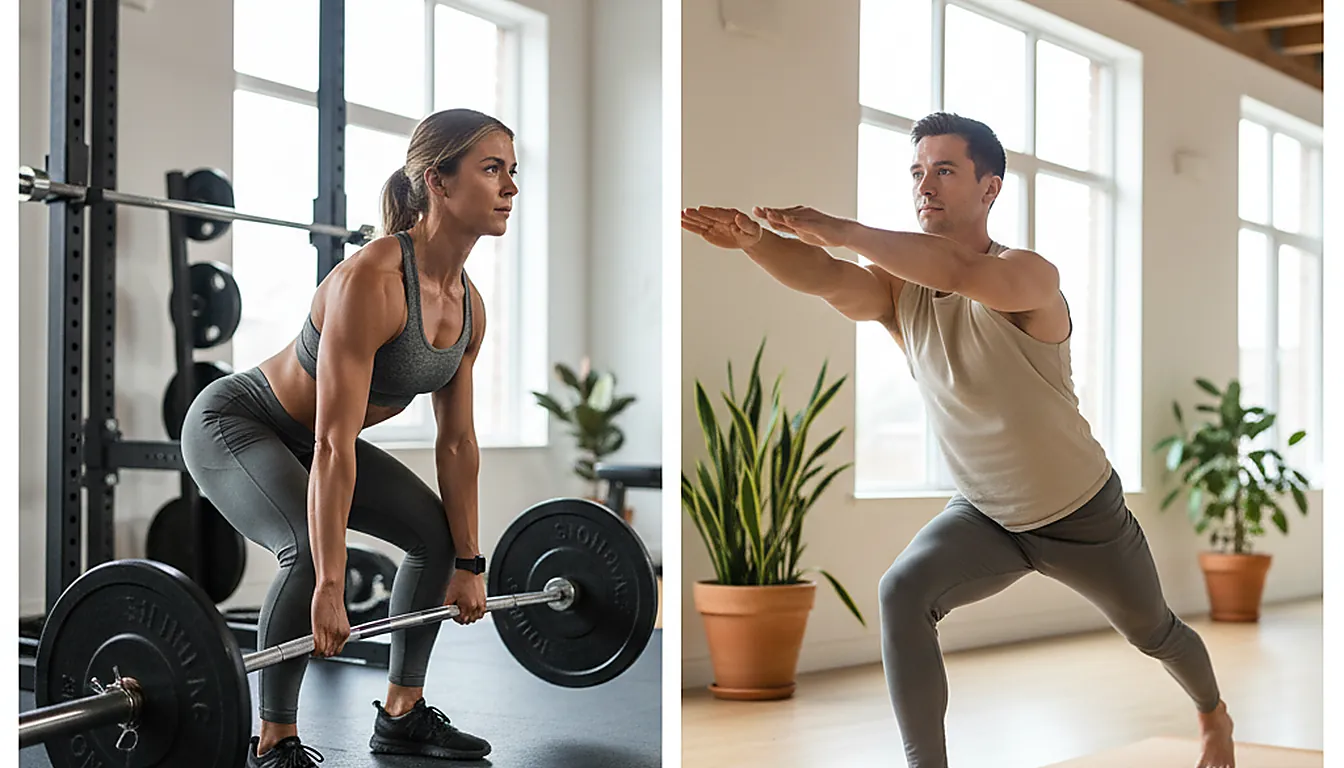
So, which is better? It depends on your goals. If you’re looking to build massive muscle mass, then traditional strength training is probably the way to go. But if you’re looking for functional strength, improved flexibility, core stability, and a mind-body connection, then yoga might be a better fit. Or, like me, you can do both!
Back to the flow—this is the practical bit.
How to Incorporate Yoga for Strength Building
Ready to add some strength-building yoga into your routine? Here are a few tips:
- Choose the Right Style: Focus on styles like Ashtanga, Power Yoga, or Vinyasa, which are more physically demanding.
- Hold Poses Longer: Holding poses for longer periods of time increases the challenge and builds more strength.
- Add Variations: Try adding variations to poses to make them more challenging. For example, instead of just holding plank, try doing plank taps or plank jacks.
- Use Props: Props like blocks and straps can help you deepen your poses and get more out of your practice.
- Listen to Your Body: It’s important to listen to your body and avoid pushing yourself too hard, especially when you’re first starting out.
My Verdict: Yoga is *Definitely* Strength Training (But…)
So, circling back to our original question: Is yoga really strength training? My answer is a resounding YES… with a caveat. It’s not going to build the same kind of muscle mass as lifting heavy weights, but it *will* build functional strength, improve your flexibility, and enhance your overall well-being.
Think of it this way: Yoga is like building a strong foundation for your body. It strengthens your core, improves your balance, and increases your awareness. Then, you can build upon that foundation with other forms of exercise, like running, swimming, or, yes, even weightlifting. So yoga for muscle building is an option but with realistic expectations.
Ready to Give it a Try?
If you’re feeling inspired to incorporate more yoga into your life, I encourage you to do it! Start with a beginner-friendly class, explore different styles, and find what works best for you. You might be surprised at how strong you can become, both physically and mentally. And remember, it’s not about being perfect, it’s about showing up and doing your best. You got this!
Key Takeaways
- Is Yoga Really Strength Training? The Surprising Truth
- My Own ‘Aha’ Moment with Yoga and Strength
- Understanding the Different Styles of Yoga
- So, Which Muscles Does Yoga Target?
- Yoga vs. Traditional Strength Training: A Head-to-Head Comparison