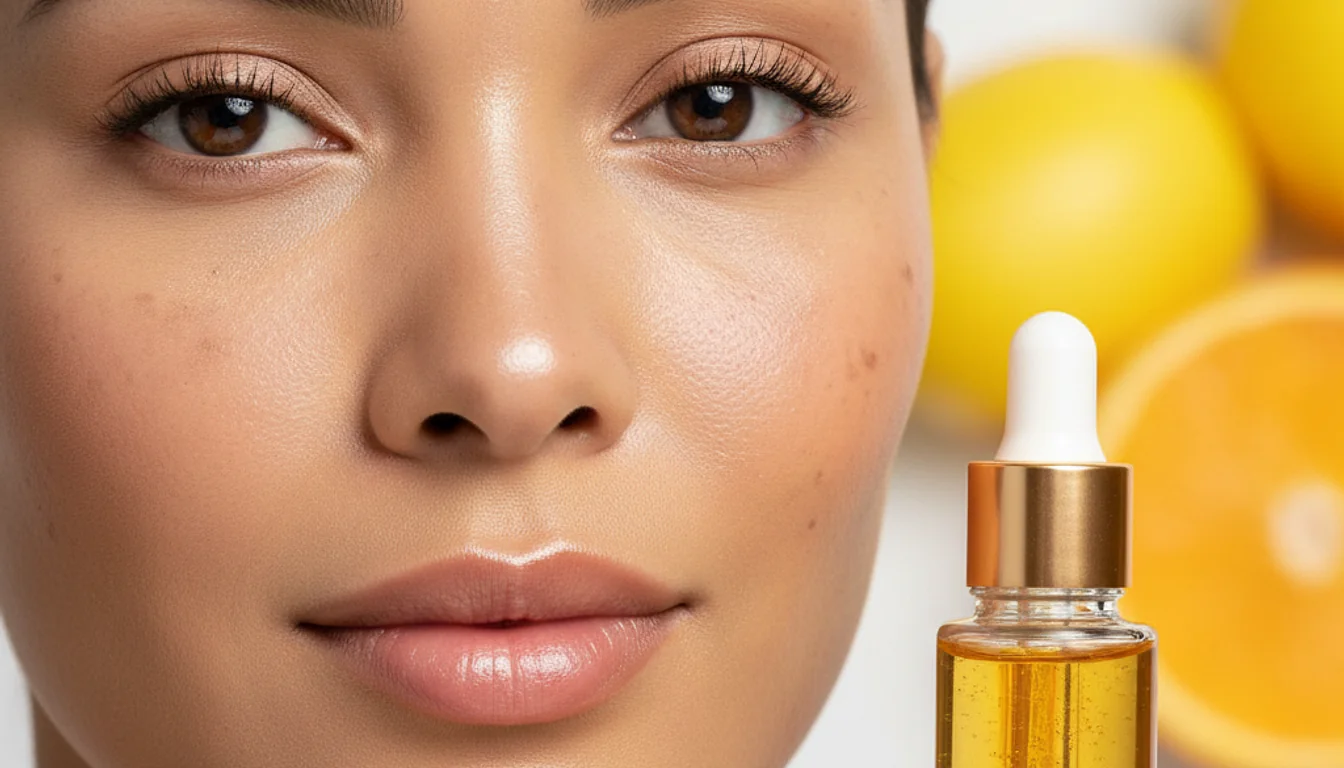
Ugh, I get it. You stare in the mirror, and what do you see? Those pesky dark spots – the remnants of sun damage, acne scars, or maybe just a natural part of aging. I’ve been there. I once felt so self-conscious about my melasma that it brought me to tears. I felt like I’d tried everything, but nothing seemed to make a lasting difference.
That’s when I finally dove deep into the world of skincare and discovered the transformative power of vitamin C serum for dark spots. And the results? Let’s just say it changed my entire skincare game. If you’re looking for a genuine path to brighter, more even-toned skin, you’re in the right place.
Today, I’m going to share the secrets I learned, giving you a practical 7-day plan to kickstart your journey to seeing real results. Because let’s be honest, we all want that radiant, confident glow, right?
Disclaimer: This content is for informational purposes only and is not medical advice. Always consult your doctor or a board-certified dermatologist before starting any new skincare routine, especially if you have sensitive skin, allergies, or any underlying skin conditions.
Understanding Vitamin C Serum: Your Bright Skin Ally
Before we dive into the plan, let’s understand why vitamin C serum is such a powerhouse ingredient for fading dark spots and brightening your complexion.
What Makes Vitamin C So Effective for Skin?
Vitamin C, specifically L-Ascorbic Acid (its purest form) and its derivatives, is a potent antioxidant that offers a multitude of benefits for your skin:
- Fades Dark Spots: Vitamin C inhibits tyrosinase, an enzyme crucial for melanin production. By doing so, it helps to reduce the appearance of hyperpigmentation, including sun spots, age spots, post-inflammatory hyperpigmentation (PIH) from acne, and even melasma.
- Brightens Complexion: Beyond targeting specific spots, vitamin C gives your entire skin tone a noticeable boost, leading to a more radiant and luminous appearance.
- Powerful Antioxidant Protection: It neutralizes free radicals caused by UV radiation, pollution, and other environmental stressors. This protection helps prevent future damage and premature aging.
- Boosts Collagen Production: Vitamin C is essential for collagen synthesis, the protein responsible for skin’s firmness and elasticity. Regular use can help reduce the appearance of fine lines and wrinkles.
In essence, vitamin C works by both preventing new dark spots from forming and actively reducing the intensity of existing ones, all while improving overall skin health and radiance.
Your 7-Day Brightening Bootcamp: A Step-by-Step Plan
Ready to see a difference? This 7-day plan is designed to jumpstart your journey to brighter, more even-toned skin. Consistency is key, even for a short period, to allow the vitamin C to begin its work.
Daily Routine for Optimal Results
Follow this simple routine for seven consecutive days. Remember to patch test any new product before applying it to your entire face.
-
Morning Routine:
- Step 1: Cleanse (1 minute): Gently wash your face with a mild cleanser to remove any overnight buildup.
- Step 2: Tone (optional, 30 seconds): If you use a toner, apply it now. Opt for a hydrating, alcohol-free formula.
- Step 3: Vitamin C Serum (1 minute): Apply 3-5 drops of your chosen vitamin C serum to your face and neck. Gently pat it in until absorbed.
- Step 4: Moisturize (1 minute): Follow with a hydrating moisturizer to lock in moisture and support your skin barrier.
- Step 5: SPF (30 seconds): This step is NON-NEGOTIABLE. Apply a broad-spectrum sunscreen with at least SPF 30. Vitamin C can make your skin more sensitive to the sun, and SPF is crucial for preventing new dark spots and protecting your skin.
-
Evening Routine:
- Step 1: Cleanse (1-2 minutes): Thoroughly cleanse your face to remove makeup, sunscreen, and daily impurities. Consider a double cleanse if you wear heavy makeup or SPF.
- Step 2: Tone (optional, 30 seconds): If you use a toner, apply it now.
- Step 3: Treatment (if applicable, 1 minute): If you use other targeted treatments (like hyaluronic acid, niacinamide, or a mild retinol on alternate nights), apply them now. Avoid layering strong retinoids or AHAs directly with vitamin C in the same routine, especially when starting out.
- Step 4: Moisturize (1 minute): Finish with a nourishing night cream to support skin repair and hydration while you sleep.
What to Expect During Your 7 Days
While significant fading of deep-set dark spots takes longer, you can expect to notice some initial improvements within a week:
- Days 1-3: Your skin may feel softer and look a bit more radiant. Some people experience a slight tingling sensation initially, which usually subsides.
- Days 4-7: You might observe a subtle improvement in your skin’s overall brightness and an enhanced glow. Existing dark spots may appear slightly less prominent, but patience is key for more dramatic results.
Remember, this 7-day plan is a fantastic starting point. The real magic of vitamin C unfolds with consistent, long-term use.
Maximizing Your Results: Skincare Secrets & Best Practices
To truly harness the power of your vitamin C serum and ensure you’re getting the most out of your routine, consider these essential skincare secrets and common mistakes to avoid.
The Art of Layering: Where Does Vitamin C Fit In?
Proper layering ensures each product can penetrate and work effectively. The general rule is to apply products from thinnest to thickest consistency.
- After Cleansing & Toning: Vitamin C serum should be applied to clean, dry skin after cleansing and any toners. This allows it to absorb directly and deliver its benefits.
- Before Moisturizer & SPF: Always follow your vitamin C serum with a moisturizer to hydrate and seal in the active ingredients. In the morning, SPF is your final, crucial step.
- Compatibility with Other Ingredients:
- Hyaluronic Acid: Excellent to layer with vitamin C for added hydration.
- Niacinamide: Generally safe to use with vitamin C, but if you have very sensitive skin, you might prefer to use them at different times of the day (e.g., Vitamin C in the morning, Niacinamide at night).
- Retinoids & AHAs/BHAs: Use caution. It’s often best to use vitamin C in the morning and retinoids/exfoliating acids at night to avoid potential irritation, especially when starting out.
Common Skincare Mistakes to Avoid
Even with the best intentions, some common errors can hinder your vitamin C results:
- Skipping SPF: This is the biggest mistake. Vitamin C helps protect against sun damage, but it doesn’t replace sunscreen. Without daily SPF, new dark spots will form, negating your efforts.
- Using Oxidized Serum: Vitamin C is notoriously unstable. If your serum has turned dark yellow or brown, it has oxidized and lost its potency. Discard it and get a new one.
- Incorrect Storage: Store your vitamin C serum in a cool, dark place, away from direct sunlight and heat. Look for serums in dark, opaque bottles with air-tight pumps or droppers to minimize exposure to light and air.
- Not Being Consistent: While 7 days is a kickstart, true results for dark spot fading require consistent, daily use over several weeks to months.
- Starting with Too High a Concentration: If you’re new to vitamin C, start with a lower concentration (e.g., 10-15% L-Ascorbic Acid) to allow your skin to adjust, especially if you have sensitive skin.
- Expecting Instant Miracles: Skincare takes time. Be patient and consistent, and you will see improvements.
Choosing the Right Vitamin C Serum (and My Top Picks)
With so many options on the market, how do you pick the best vitamin C serum for your needs? Here’s what to look for, along with general advice on what makes a good product.
What to Look For in a Vitamin C Serum
- Form of Vitamin C:
- L-Ascorbic Acid (LAA): This is the purest and most potent form of vitamin C. It’s highly effective but also the most unstable.
- Derivatives (e.g., Sodium Ascorbyl Phosphate, Magnesium Ascorbyl Phosphate, Tetrahexyldecyl Ascorbate): These are more stable and gentler, making them great for sensitive skin, but they may be less potent than LAA.
- Concentration: For L-Ascorbic Acid, a concentration between 10-20% is generally considered optimal. Higher concentrations aren’t necessarily better and can cause irritation. For derivatives, concentrations can vary.
- Packaging: Look for dark, opaque bottles or airless pumps. Clear bottles or jar packaging expose the serum to light and air, accelerating oxidation.
- Stabilizers: Ingredients like Ferulic Acid and Vitamin E are often added to vitamin C serums because they help stabilize the L-Ascorbic Acid and boost its antioxidant power.
- pH Level: For L-Ascorbic Acid to be most effective, the serum should have a low pH (around 3.5).
My Top Picks (General Recommendations)
While I can’t recommend specific brands, I always look for serums that meet the criteria above. Here are the types of products I gravitate towards:
- For Potency & Results: A serum featuring 15-20% L-Ascorbic Acid, stabilized with Ferulic Acid and Vitamin E, in an opaque, airtight dropper bottle. These are often considered the gold standard for fading dark spots quickly.
- For Sensitive Skin: A serum with a gentler derivative like Sodium Ascorbyl Phosphate or Tetrahexyldecyl Ascorbate. These are less likely to cause irritation and still offer significant brightening benefits.
- For Hydration & Brightening: A formula that combines Vitamin C with hydrating ingredients like Hyaluronic Acid or Glycerin. This ensures your skin stays plump and dewy while getting its brightening boost.
Always read reviews and consider your skin type and concerns when making your choice.
Beyond 7 Days: The Power of Consistency
The 7-day plan is an excellent starting point, but it’s crucial to understand that genuine, lasting transformation in your skin’s tone and texture comes from sustained effort. Think of the first week as laying the foundation; the real construction happens over time.
Dark spots, sun damage, and uneven skin tone didn’t appear overnight, and they won’t disappear in a flash either. Consistent, daily application of vitamin C serum, coupled with diligent sun protection, is the most effective strategy for:
- Significantly fading stubborn dark spots.
- Maintaining a bright, radiant complexion.
- Protecting your skin from future environmental damage.
- Boosting collagen for long-term firmness and elasticity.
Make vitamin C a permanent fixture in your morning routine, and you’ll continue to reap its incredible benefits for years to come.
Your Questions Answered: Vitamin C Serum FAQs
Here are some common questions people ask about using vitamin C serum:
How long until I see significant results from vitamin C serum?
While you might notice an initial glow and subtle improvements in brightness within 1-2 weeks, significant fading of dark spots typically takes 4-12 weeks of consistent daily use. Deeper pigmentation or melasma may require even longer.
Can I use vitamin C serum every day?
Yes, most vitamin C serums are formulated for daily use, typically in the morning. If you have sensitive skin, you might start by using it every other day and gradually increase frequency.
What concentration of vitamin C should I start with?
If you’re new to vitamin C, start with a concentration of 10-15% L-Ascorbic Acid. Once your skin adjusts, you can gradually move up to 20% if desired. For sensitive skin, a derivative form or a lower concentration is a good starting point.
Can sensitive skin use vitamin C?
Yes, but with caution. Look for serums with gentler vitamin C derivatives (like Sodium Ascorbyl Phosphate) or lower concentrations of L-Ascorbic Acid. Always patch test first, and introduce it slowly into your routine.
How do I store vitamin C serum to prevent oxidation?
Store your vitamin C serum in a cool, dark place, away from direct sunlight, heat, and humidity. Ensure the cap is tightly sealed after each use. Serums in opaque, airless pump bottles are generally more stable than those in clear dropper bottles.
What’s the difference between L-Ascorbic Acid and its derivatives?
L-Ascorbic Acid (LAA) is the purest and most biologically active form of vitamin C, offering the most potent results but also being the most unstable. Derivatives (like Sodium Ascorbyl Phosphate, Magnesium Ascorbyl Phosphate, Tetrahexyldecyl Ascorbate) are more stable, have a longer shelf life, and are often gentler on the skin. They need to be converted by the skin into LAA to be effective, which can make them slightly less potent but still very beneficial.