Key Takeaways & Performance Summary:
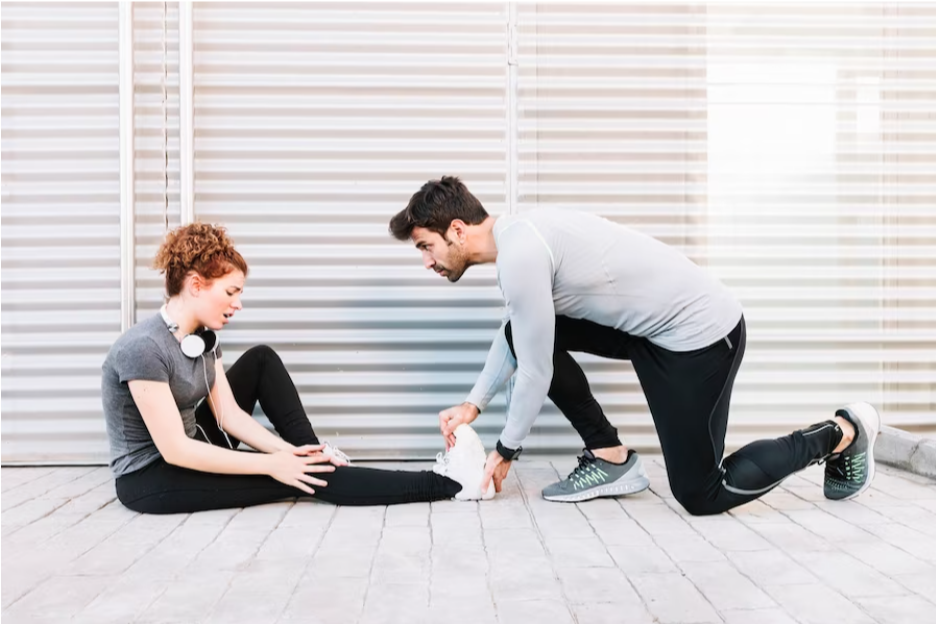
- Impact Forces: Running produces ground reaction forces 2.5 to 3.5 times bodyweight per footstrike, accumulating millions of pounds of force over a marathon.
- The Gluteus Medius Deficit: Weak hip abductors cause the pelvic bowl to drop (Trendelenburg sign), driving knee internal rotation and IT band friction.
- Myth of IT Band Foam Rolling: The iliotibial tract is an extremely stiff fascial tendon that cannot be ‘loosened’ with a foam roller; treat the tensor fasciae latae and glutes instead.
- Heavy Resistance Benefit: Lifting heavy loads (>80% 1RM) increases running economy by 3-5% without inducing unwanted muscular hypertrophy.
Why Running Alone Is Not Enough
A widespread misconception among distance runners is that logging more weekly mileage builds sufficient leg strength. While running develops aerobic capacity and local muscular endurance, it is essentially thousands of continuous single-leg plyometric impacts. Each footstrike delivers ground reaction forces reaching nearly triple body weight.
Without dedicated heavy strength training to thicken patellar and Achilles tendons, strengthen the periarticular cartilage, and build robust hip stabilizers, repetitive mechanical overload inevitably manifests as runner’s knee or iliotibial band friction syndrome.
The Biomechanical Culprit: Pelvic Instability
When you land on a single foot, your opposite hip is suspended in air. If the stance-leg gluteus medius and minimus lack the strength to hold the pelvis level, the unsupported hip drops. This pelvic drop forces the femur into adduction and internal rotation, creating a dynamic knee valgus collapse. This mechanical misalignment pulls the patella off-track against the femoral groove and exerts extreme friction on the distal IT band.
| Condition | Root Cause | Target Strength Intervention |
|---|---|---|
| Patellofemoral Pain Syndrome | Patellar tracking malalignment & weak VMO | Spanish squats, heavy leg extensions, terminal knee extensions |
| IT Band Syndrome | Weak glute medius leading to TFL overactivity | Single-leg Romanian deadlifts, side-lying hip abductions |
| Achilles Tendinopathy | Low tendon collagen stiffness & calf weakness | Heavy slow-resistance straight & bent-knee calf raises |
The Four Non-Negotiable Runner Lifts
To stay injury-free across marathon training cycles, incorporate these four compound lifts twice weekly:
- Bulgarian Split Squats: Fixes single-leg muscular imbalances while strengthening the glute-quad axis under hip extension.
- Single-Leg Romanian Deadlifts: Develops posterior chain strength, hamstring tendon resilience, and ankle proprioception.
- Soleus-Targeted Seated Calf Raises: The soleus absorbs up to 8x bodyweight during running; heavy seated loading is essential.
- Pallof Anti-Rotation Core Presses: Eliminates excessive rotational energy leaks in the torso during arm swings.
Performance Pro-Tip:
Stop painfully rolling your IT band with hard foam rollers. The IT band is as stiff as soft steel cable and cannot be lengthened by rolling. Instead, foam roll your Tensor Fasciae Latae (TFL) at the front of your hip and strengthen your posterior glutes.
The Bottom Line on Running Resilience
Strong runners are resilient runners. Integrating heavy, intentional strength training into your running weekly schedule bulletproofs connective tissues, fixes kinetic compensations, and unlocks new personal records.