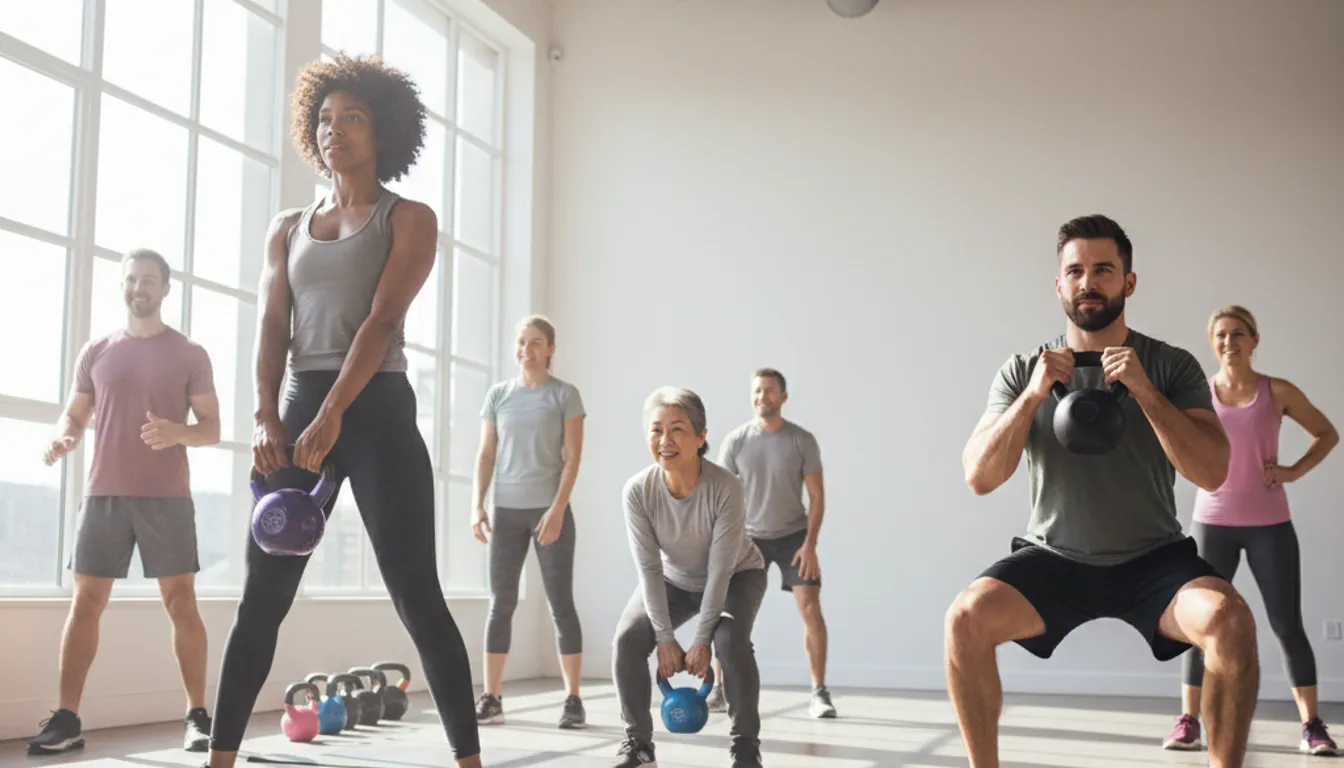
I was crying in Target, girl. Not because of a crying toddler or a dropped ice cream cone, but because I was staring at a display of… kettlebells. Kettlebells! I’d signed up for a beginner’s fitness class and felt completely out of my depth. The thought of swinging a heavy metal ball around filled me with dread. It felt like everyone else in the class was already a super-fit, Instagram-famous fitness guru.
Sound familiar? You’re not alone. I get it. The gym can be intimidating, especially when you’re just starting. The good news? You don’t need to be a CrossFit champion to get started with beginner kettlebell exercises. In fact, you don’t even need to feel comfortable in the gym. (Although, eventually, that would be nice!) This article is for you. For me. For anyone who’s ever felt like a fish out of water in the fitness world.
Why Kettlebells?
Why kettlebells over, say, dumbbells or resistance bands? Well, a few reasons. First, they’re incredibly versatile. You can do a full-body workout with just one kettlebell. Second, they’re amazing for functional fitness. This means the exercises mimic everyday movements, so you’re not just building muscle, you’re also improving your coordination, balance, and overall strength.
And third? They’re just… fun. (Okay, maybe not always fun in the middle of a set, but the feeling of accomplishment afterward? Priceless.)
My Kettlebell Confession: The Swing That Changed Everything
I’ll never forget my first kettlebell class. I was so nervous. I’d watched countless YouTube videos, read articles about the benefits of kettlebells, and even bought a cute workout outfit (priorities!). But when it came to actually doing the exercises, I felt clumsy and unsure. I spent half the class worrying I was going to drop the kettlebell on my foot. (Spoiler alert: I didn’t.)
But then, we got to the kettlebell swing. And something clicked. It wasn’t perfect, not by a long shot. But I felt a surge of…power. And for a former corporate burnout like myself, that was huge. I was hooked. That swing, girl, that swing changed everything. (And if you’re looking for more guidance on that swing specifically, check out this great article: The Beginner’s Guide to Mastering the Kettlebell Swing.)
The 5 Best Beginner Kettlebell Exercises
Ready to get started? Here are five simple, effective, and confidence-boosting beginner kettlebell exercises. I’ll walk you through each one, step-by-step.
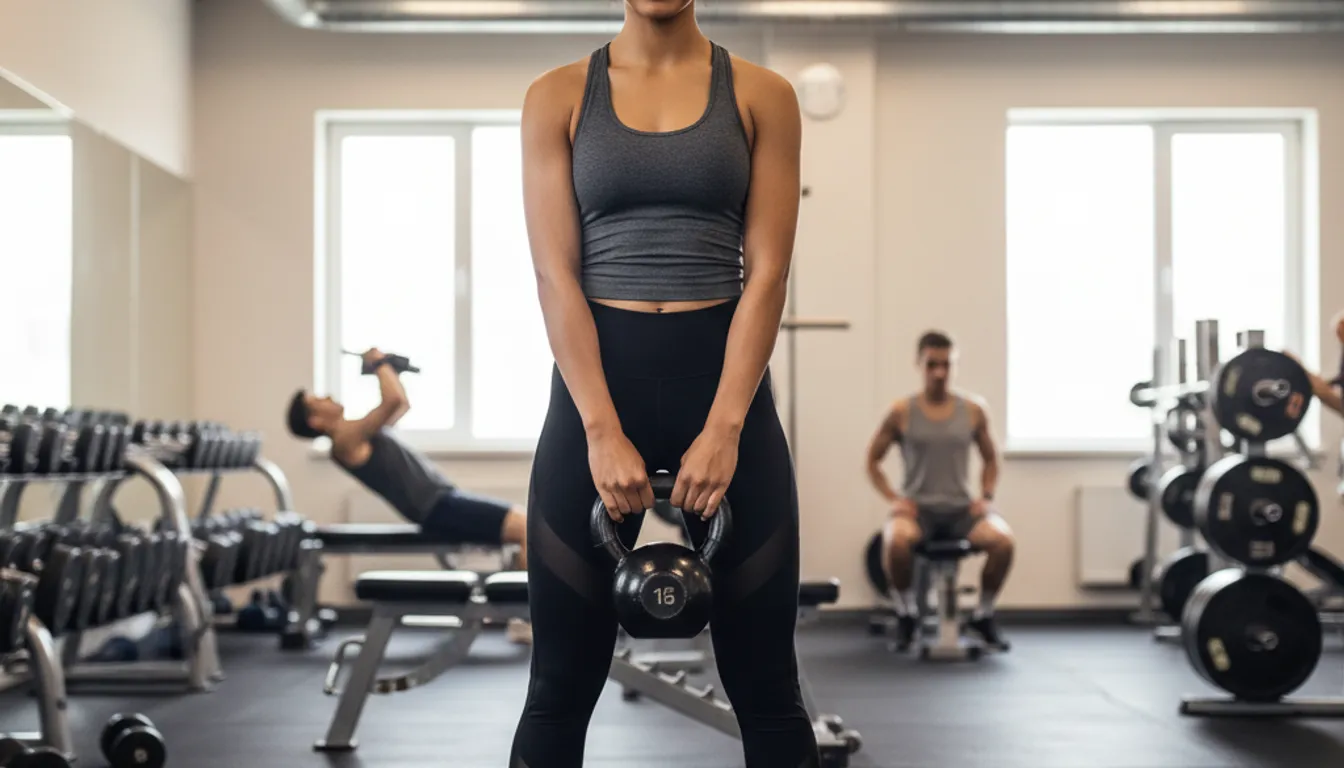
The Two-Handed Kettlebell Swing
This is the foundation. Master this, and you’re well on your way. It might feel weird at first, but with practice, you’ll get it!
- Stand with your feet shoulder-width apart, kettlebell on the floor in front of you.
- Hinge at your hips (like you’re closing a car door with your butt), keeping your back straight.
- Grip the kettlebell with both hands, palms facing down.
- Swing the kettlebell back between your legs.
- Drive your hips forward powerfully, using that momentum to swing the kettlebell up to chest height.
- Control the descent, letting the kettlebell swing back between your legs.
- Repeat for 10-15 reps.
The Kettlebell Goblet Squat
Squats are your friend. This variation will help you improve your form and build leg strength.
- Hold the kettlebell with both hands in front of your chest (like you’re holding a goblet).
- Stand with your feet slightly wider than shoulder-width apart, toes turned out slightly.
- Keeping your back straight and chest up, squat down as if you’re sitting in a chair. Aim to get your thighs parallel to the ground.
- Push through your heels to stand back up.
- Repeat for 10-15 reps.
The Kettlebell Deadlift
This exercise targets your hamstrings, glutes, and back. It’s fantastic for overall strength.
- Stand with the kettlebell in front of your feet.
- Hinge at your hips, keeping your back straight, and grab the kettlebell with both hands.
- Keeping the weight close to your body, stand up, squeezing your glutes at the top.
- Slowly lower the kettlebell back to the floor, hinging at your hips.
- Repeat for 8-12 reps.
The Kettlebell Halo
Great for shoulder mobility and core stability. It’s also a surprisingly fun exercise.
- Hold the kettlebell upside down by the handle in front of your chest.
- Keeping your core engaged, slowly circle the kettlebell around your head, passing it from hand to hand.
- Complete the circle in one direction, then switch directions.
- Do 5-8 reps in each direction.
The Kettlebell Romanian Deadlift (RDL)
This is a variation of the deadlift that focuses on your hamstrings and glutes.
- Stand with feet hip-width apart, holding the kettlebell in front of your thighs.
- Hinge at your hips, keeping your back straight, and lower the kettlebell towards the floor, keeping it close to your legs.
- You should feel a stretch in your hamstrings.
- Stop when you feel the stretch, or when your back starts to round.
- Return to the starting position, squeezing your glutes.
- Do 10-12 reps.
Your Beginner Kettlebell Workout Routine: Week 1
Ready to put these exercises into action? Here’s a simple week-long routine to get you started. Remember to listen to your body and take rest days when you need them. And, most importantly, have fun!
| Day | Exercise | Sets | Reps | Rest | Notes |
|---|---|---|---|---|---|
| Monday | Two-Handed Kettlebell Swing | 3 | 12-15 | 60 seconds | Focus on form |
| Kettlebell Goblet Squat | 3 | 12-15 | 60 seconds | Keep your back straight | |
| Tuesday | Rest or Active Recovery (yoga, walking) | ||||
| Wednesday | Kettlebell Deadlift | 2 | 10-12 | 60 seconds | Engage your core |
| Kettlebell Halo | 2 | 8 in each direction | 45 seconds | Control the movement | |
| Thursday | Rest or Active Recovery (yoga, walking) | ||||
| Friday | Two-Handed Kettlebell Swing | 3 | 12-15 | 60 seconds | Focus on power |
| Kettlebell Romanian Deadlift (RDL) | 3 | 10-12 | 60 seconds | Feel the hamstring stretch | |
| Saturday & Sunday | Rest or Active Recovery | ||||
Scaling the Exercises: Don’t Be Afraid to Modify
The beauty of these beginner kettlebell exercises is their adaptability. If something feels too challenging, don’t be afraid to modify it. Here are a few tips:
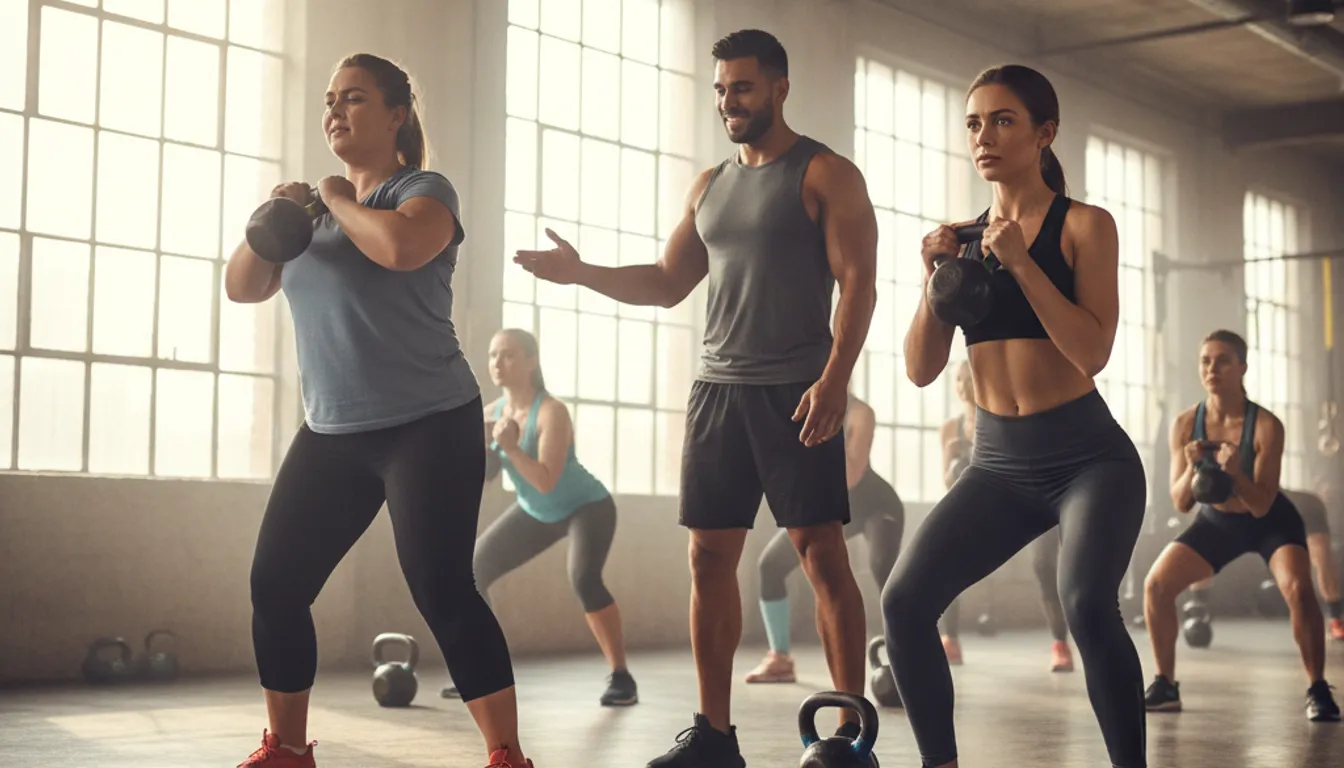
- Start with a lighter weight. Seriously, I cannot stress this enough. It’s better to use a lighter kettlebell and master the form than to injure yourself trying to lift too much weight.
- Modify the reps. If 15 reps are too many, do 10. If 10 are too many, do 5. Listen to your body!
- Use a spotter. If you’re using heavier weights, ask a friend or trainer to watch your form, especially when you are doing things like the deadlift.
- Take breaks. Rest when you need to. Rest days are super important!
My Biggest Kettlebell Mistake (and How to Avoid It)
I made plenty of mistakes when I started out. One of the biggest? I tried to do too much, too soon. I’d see people crushing these insane workouts on Instagram and think, “I can do that!” Plot twist: I couldn’t. (And, honestly, I shouldn’t have been trying!) I ended up with sore muscles, zero motivation, and a bruised ego.
The lesson? Patience, grasshopper. Consistency is key. Start slow, focus on proper form, and gradually increase the weight or reps as you get stronger. Celebrate your small victories. And don’t compare yourself to others. Your fitness journey is yours, and yours alone.
Why Focus on Proper Form? (It’s Not Just About Looking Good!)
I know, I know. Form can seem boring. But trust me, it’s everything. Proper form prevents injuries, maximizes your results, and ensures you’re working the correct muscles. It’s also super important to build that confidence I was talking about. You will quickly learn to trust your body, and that confidence is a HUGE win. Here’s why form is king:
- Injury Prevention: Incorrect form puts you at risk of strains, sprains, and other injuries.
- Muscle Activation: Proper form ensures you’re activating the right muscles, leading to more effective workouts.
- Long-Term Progress: Mastering form allows you to progressively overload and continue to improve over time.
- Confidence Boost: Knowing you’re doing an exercise correctly builds your confidence in the gym.
From Overwhelmed to Empowered: My Client’s Success Story
I’m gonna share a client story to illustrate this because this is what I do. (I’m a wellness writer, not a fitness influencer!)
One of my clients, Sarah, came to me feeling just like I did. Overwhelmed. Intimidated by the gym. She’d tried countless workout programs but always gave up after a few weeks. We started with these same beginner kettlebell exercises, focusing on form and consistency. We took it slow, celebrated every small win, and, most importantly, had fun.
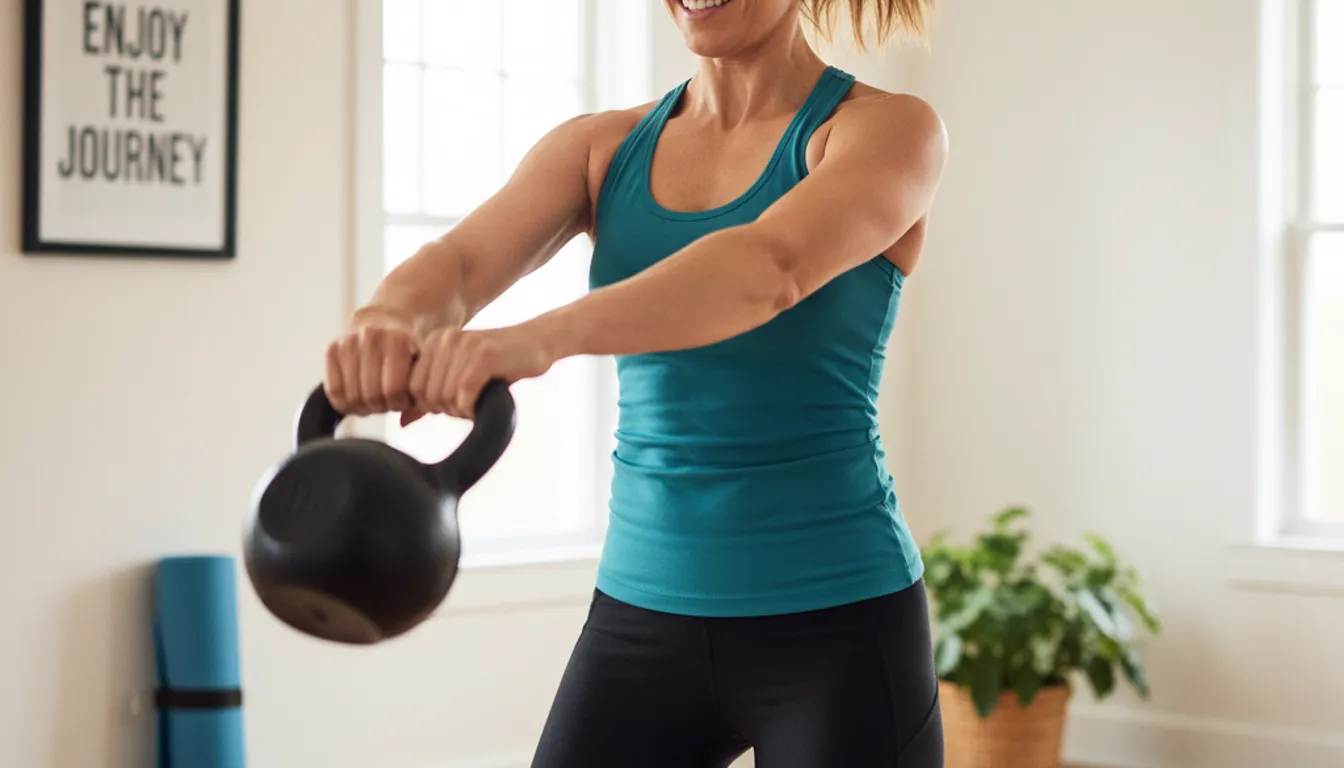
Fast forward a few months, and Sarah is a different woman. She’s stronger, more confident, and actually enjoys her workouts. She’s crushing her fitness goals. That’s because these exercises, when done right, aren’t just about physical strength. They’re about building mental resilience, too. This is not just a weight loss journey, this is a whole mindset shift.
I know what you’re thinking: “Yeah, yeah, it works for her.” But I’m here to tell you, it can work for you, too.
Additional Tips for Kettlebell Success
Here are a few more things that will help on your kettlebell journey:
- Warm-up: Always warm up before you start your workout with some light cardio and dynamic stretching.
- Cool-down: After your workout, cool down with static stretching.
- Listen to your body: If something hurts, stop. Rest days are your friends.
- Stay hydrated: Drink plenty of water before, during, and after your workouts.
- Find a good trainer: If possible, consider working with a qualified trainer who can help you refine your form and design a personalized workout plan.
Beyond the Exercises: Mindset Matters
Let’s get real for a sec. Fitness isn’t just about the physical exercises. It’s also about your mindset. It’s about self-compassion, building habits, and the courage to show up for yourself, even when you don’t feel like it. Check out this article on building good habits that can help you with your fitness journey: Life Audit: The 3 Areas You Need to Review Before the New Year.
Key Takeaway: Be kind to yourself. There will be good days and bad days. Don’t let a setback derail you. Focus on progress, not perfection.
Frequently Asked Questions About Beginner Kettlebell Exercises
What weight kettlebell should I start with?
For women, I usually recommend starting with an 8-10 lb kettlebell. For men, start with 15-20 lbs. If you’re unsure, try a lighter weight and focus on form. You can always increase the weight later!
How often should I work out with kettlebells?
For beginners, 2-3 times per week is a good starting point. Make sure to include rest days for muscle recovery.
How long should I rest between sets?
60 seconds is a good starting point, but adjust as needed. Listen to your body and rest longer if you need it.
Can I do these exercises at home?
Absolutely! All you need is a kettlebell. You can find them online or at most sporting goods stores.
What if I don’t feel comfortable in the gym?
That’s okay! Start by working out at home, or find a gym that feels welcoming and supportive. Maybe bring a friend! And remember, everyone starts somewhere.
How long will it take to see results?
That depends on your goals, your consistency, and your diet. But with regular workouts, you should start to see results in a few weeks. The mental wins come much faster!
Should I be worried about getting bulky?
Building muscle takes time and effort. Most women don’t get “bulky” from kettlebell workouts. The focus is on building lean muscle and improving overall strength and fitness.
So, there you have it, girl. Your guide to beginner kettlebell exercises. Get ready to feel strong, confident, and, yes, maybe even a little bit badass. It’s a journey, not a race. You got this!
/* Scoped Typography & Layout */ .gen-prose h2 { margin-top: 1.5em; margin-bottom: 0.6em; font-size: 1.75em; color: #111827; font-weight: 700; letter-spacing: -0.025em; } .gen-prose h3 { margin-top: 1.3em; margin-bottom: 0.5em; font-size: 1.4em; color: #374151; font-weight: 600; letter-spacing: -0.015em; } .gen-prose p { line-height: 1.75; margin-bottom: 1.25em; color: #4b5563; font-size: 1.05em; } .gen-prose img { max-width: 100%; height: auto; display: block; border-radius: 12px; margin: 16px auto; } .gen-prose figure.wp-block-image img { border-radius: 12px; } /* Modern Key Takeaways */ .gen-prose .key-takeaways, .gen-prose blockquote.key-takeaways { background: #eff6ff; /* Blue-50 */ border-left: 4px solid #3b82f6; /* Blue-500 */ border-radius: 12px; padding: 24px; margin: 32px 0; box-shadow: 0 1px 3px rgba(0,0,0,0.05); font-style: normal; .key-takeaways strong { color: #1d4ed8; font-weight: 700; } /* Modern Pro Tip */ .gen-prose .pro-tip { background: #f0fdf4; /* Green-50 */ border-left: 4px solid #22c55e; /* Green-500 */ border-radius: 12px; padding: 24px; margin: 32px 0; box-shadow: 0 1px 3px rgba(0,0,0,0.05); .pro-tip:before { content: ‘💡 Pro Tip’; font-weight: 800; display: block; margin-bottom: 8px; color: #15803d; text-transform: uppercase; font-size: 0.85em; letter-spacing: 0.05em; /* Modern Warning */ .gen-prose .warning { background: #fef2f2; /* Red-50 */ border-left: 4px solid #ef4444; /* Red-500 */ border-radius: 12px; padding: 24px; margin: 32px 0; box-shadow: 0 1px 3px rgba(0,0,0,0.05); .warning:before { content: ‘⚠️ Warning’; font-weight: 800; display: block; margin-bottom: 8px; color: #b91c1c; text-transform: uppercase; font-size: 0.85em; letter-spacing: 0.05em; /* Modern Smart Checklist (SVG Icon) */ .gen-prose .smart-checklist { list-style: none; padding: 0; margin: 24px 0; } .gen-prose .smart-checklist li { padding-left: 36px; position: relative; margin-bottom: 12px; color: #374151; line-height: 1.6; .gen-prose .smart-checklist li:before { content: ”; position: absolute; left: 0; top: 3px; width: 22px; height: 22px; background-image: url(“data:image/svg+xml,%3Csvg xmlns=’http://www.w3.org/2000/svg’ viewBox=’0 0 20 20′ fill=’%2310b981’%3E%3Cpath fill-rule=’evenodd’ d=’M10 18a8 8 0 100-16 8 8 0 000 16zm3.707-9.293a1 1 0 00-1.414-1.414L9 10.586 7.707 9.293a1 1 0 00-1.414 1.414l2 2a1 1 0 001.414 0l4-4z’ clip-rule=’evenodd’/%3E%3C/svg%3E”); background-repeat: no-repeat; background-position: center; background-size: contain; /* Smart Cards (Modern Gradient & Shadow) */ .gen-prose .smart-card-grid { display: grid; grid-template-columns: repeat(auto-fill, minmax(280px, 1fr)); gap: 24px; margin: 32px 0; .gen-prose .smart-card { background: #ffffff; background: linear-gradient(145deg, #ffffff 0%, #f9fafb 100%); border: 1px solid #e5e7eb; border-left: 4px solid #6366f1; /* Indigo Accent */ border-radius: 12px; padding: 24px; box-shadow: 0 4px 6px -1px rgba(0, 0, 0, 0.05), 0 2px 4px -1px rgba(0, 0, 0, 0.03); transition: all 0.3s cubic-bezier(0.4, 0, 0.2, 1); position: relative; overflow: hidden; .gen-prose .smart-card:hover { transform: translateY(-4px); box-shadow: 0 20px 25px -5px rgba(0, 0, 0, 0.1), 0 10px 10px -5px rgba(0, 0, 0, 0.04); border-left-color: #4f46e5; .gen-prose .smart-card strong, .gen-prose .smart-card h3 { display: block; margin-bottom: 12px; color: #111827; font-size: 1.2em; font-weight: 700; border-bottom: 1px solid #f3f4f6; padding-bottom: 12px; letter-spacing: -0.01em; .gen-prose .smart-card p { color: #4b5563; line-height: 1.6; font-size: 0.95em; margin: 0; .gen-prose .smart-card ul, .gen-prose .smart-card ol { margin: 0; padding-left: 1.25em; } .gen-prose .smart-card li { margin: 6px 0; } /* Tables (Clean & Professional) */ .gen-prose .gen-table-wrap { width: 100%; overflow-x: auto; margin: 32px 0; border: 1px solid #e5e5e5; border-top: 4px solid #6366f1; border-radius: 12px; box-shadow: 0 4px 6px -1px rgba(0, 0, 0, 0.05); background: #fff; .gen-prose table.gen-table { width: 100%; border-collapse: collapse; margin: 0; font-size: 0.95em; font-family: inherit; min-width: 100%; border: none; /* Header */ .gen-prose table.gen-table thead { background-color: #f9fafb !important; .gen-prose table.gen-table thead tr { background-color: #f9fafb !important; color: #111827 !important; border-bottom: 1px solid #e5e7eb; .gen-prose table.gen-table th { background-color: #f9fafb !important; padding: 16px 24px; text-align: left; font-weight: 700; color: #111827 !important; border-right: 1px solid #e5e7eb; font-size: 0.9em; text-transform: uppercase; letter-spacing: 0.05em; .gen-prose table.gen-table th:last-child { border-right: none; } /* Body */ .gen-prose table.gen-table td { padding: 16px 24px; border-bottom: 1px solid #e5e7eb; color: #4b5563; vertical-align: top; border-right: 1px solid #e5e7eb; line-height: 1.6; .gen-prose table.gen-table td:last-child { border-right: none; } /* Striping */ .gen-prose table.gen-table tbody tr:nth-of-type(even) { background-color: #f9fafb !important; } .gen-prose table.gen-table tbody tr:nth-of-type(odd) { background-color: #ffffff !important; } /* Hover Effect */ .gen-prose table.gen-table tbody tr:hover { background-color: #eff6ff !important; } /* Mobile Responsiveness */ @media (max-width: 768px) { .gen-prose .smart-card-grid { grid-template-columns: 1fr; gap: 16px; margin: 24px 0; } .gen-prose .gen-table-wrap { margin: 24px 0; border-radius: 8px; } .gen-prose .smart-card { padding: 20px; } .gen-prose h2 { font-size: 1.5em; margin-top: 1.2em; } .gen-prose h3 { font-size: 1.25em; } .gen-prose table.gen-table th, .gen-prose table.gen-table td { padding: 12px 16px; } .gen-prose .key-takeaways, .gen-prose .pro-tip, .gen-prose .warning { padding: 20px; } .gen-prose .gen-table-wrap { border: 1px solid #e6e6e6; border-top: 4px solid #6366f1; border-radius: 14px; background: #ffffff; box-shadow: 0 8px 20px rgba(17, 24, 39, 0.08); } .gen-prose table.gen-table { background-color: #ffffff; } .gen-prose table.gen-table thead th { position: sticky; top: 0; z-index: 2; box-shadow: inset 0 -1px 0 #e5e7eb; } .gen-prose table.gen-table tbody tr:hover { background-color: #f3f4f6 !important; } .gen-prose table.gen-table td:first-child { font-weight: 600; color: #111827; } .gen-prose table.gen-table td { font-size: 1.02em; } @media (max-width: 768px) { .gen-prose table.gen-table th, .gen-prose table.gen-table td { padding: 12px 14px; } } .gen-prose .gen-table-wrap { max-width: 860px; margin: 24px auto; border-radius: 16px; border: 1px solid #eaeaea; background: #fff; box-shadow: 0 10px 24px rgba(17,24,39,0.06); } .gen-prose table.gen-table { width: 100%; border-collapse: separate; border-spacing: 0; table-layout: auto; font-size: 1.02em; } .gen-prose table.gen-table thead th { background: #f8fafc; color: #0f172a; font-weight: 700; padding: 16px 20px; border-bottom: 1px solid #e5e7eb; } .gen-prose table.gen-table tbody td { color: #334155; padding: 16px 20px; border-bottom: 1px solid #e5e7eb; } .gen-prose table.gen-table tbody tr:nth-child(even) { background: #fcfdff; } .gen-prose table.gen-table tbody tr:hover { background: #f1f5f9 !important; } .gen-prose table.gen-table td:first-child, .gen-prose table.gen-table th:first-child { color: #111827; font-weight: 600; } .gen-prose .smart-card-grid { max-width: 860px; margin: 24px auto; gap: 24px; } .gen-prose .smart-card { background: #ffffff; border: 1px solid #e5e7eb; border-radius: 14px; padding: 22px; box-shadow: 0 6px 18px rgba(17,24,39,0.06); border-left: 4px solid #6366f1; } .gen-prose .smart-card:hover { transform: translateY(-2px); box-shadow: 0 12px 28px rgba(17,24,39,0.08); } .gen-prose .smart-card h3 { margin: 0 0 12px; color: #0f172a; font-size: 1.18em; font-weight: 700; } .gen-prose .smart-card p { color: #334155; line-height: 1.7; font-size: 0.98em; } @media (max-width: 768px) { .gen-prose .smart-card-grid { grid-template-columns: 1fr; gap: 16px; } .gen-prose .smart-card { padding: 18px; } } /* Gutenberg core blocks styling inside post content */ .gen-prose .wp-block-table table { width: 100%; border-collapse: separate; border-spacing: 0; } .gen-prose .wp-block-table.is-style-stripes table tbody tr:nth-child(even) { background: #fcfdff; } .gen-prose .wp-block-table table thead tr { background: #f8fafc; } .gen-prose .wp-block-table table th, .gen-prose .wp-block-table table td { padding: 16px 20px; border-bottom: 1px solid #e5e7eb; color: #334155; } .gen-prose .wp-block-table table th { color: #0f172a; font-weight: 700; } .gen-prose .wp-block-columns { gap: 24px; } .gen-prose .wp-block-column { background: #ffffff; border: 1px solid #e5e7eb; border-radius: 14px; padding: 18px; box-shadow: 0 6px 18px rgba(17,24,39,0.06); } .gen-prose .wp-block-group { border-radius: 14px; box-shadow: 0 6px 18px rgba(17,24,39,0.06); } .gen-prose .wp-block-list { margin: 16px 0; } .gen-prose .toc-container { max-width: 860px; margin: 24px auto; background: #ffffff; border: 1px solid #e5e7eb; border-radius: 14px; box-shadow: 0 6px 18px rgba(17,24,39,0.06); padding: 18px; } .gen-prose .toc-title { font-weight: 700; font-size: 1.1em; padding-bottom: 8px; border-bottom: 2px solid #6366f1; color: #0f172a; } .gen-prose .toc-list { list-style: none; padding-left: 0; margin: 12px 0 0; } .gen-prose .toc-list li { margin: 6px 0; } .gen-prose .toc-list a { color: #334155; text-decoration: none; } .gen-prose .toc-list a:hover { color: #1d4ed8; text-decoration: underline; }