Key Takeaways & Executive Summary:
- The Humectant Mechanism: Hyaluronic acid (HA) can bind up to 1,000 times its molecular weight in water, acting as a cellular moisture reservoir.
- Molecular Weight Dilemma: High molecular weight HA forms an invisible moisture-binding film on the epidermis, while low molecular weight penetrates deeper but may trigger pro-inflammatory signaling if unregulated.
- The Ambient Humidity Factor: In arid environments (under 40% relative humidity), unsealed HA draws moisture upward from the dermis rather than the atmosphere, exacerbating dehydration.
- The Sealing Protocol: Always layer HA serums onto damp skin and immediately lock with an emollient or lipid-rich cream to prevent reverse transepidermal loss.
Demystifying the Quintessential Hydrator
Hyaluronic acid is a naturally occurring linear glycosaminoglycan ubiquitously distributed throughout human connective tissues, extracellular matrices, and the dermal layers. In human skin, over 50% of the body’s total HA stores reside between collagen fibers, lending structural turgor, suppleness, and shock-absorbing resilience. As intrinsic aging and ultraviolet radiation deplete endogenous synthesis, topical rehydration becomes indispensable.
However, modern marketing has popularized single-molecule serums without clarifying critical biophysical dynamics. Simply splashing concentrated humectants onto dry skin can inadvertently produce the exact opposite of the intended effect, leaving the surface tight, parched, and irritated.
High vs Low Molecular Weights: A Biological Breakdown
Not all hyaluronic acid molecules behave identically. Their molecular weights range from high molecular weight (HMW, >1,000 kDa) down to ultra-low molecular weight (LMW, <50 kDa):
- High Molecular Weight (HMW): Remains on the skin surface due to large molecular size. It provides non-comedogenic moisture retention and temporary wrinkle plumpness while soothing surface irritation.
- Medium Molecular Weight (MMW): Penetrates the superficial stratum spinosum, enhancing intercellular cohesion and suppleness.
- Low Molecular Weight (LMW): Penetrates into deeper epidermal strata. While valuable for cellular hydration, excessive concentrations of fragmented LMW HA can interact with toll-like receptors (TLR2 and TLR4), potentially triggering mild inflammatory pathways in reactive individuals.
Mastering Application in Arid Climates
Humectants work through passive osmotic gradients: they draw water from areas of higher vapor pressure to lower vapor pressure. In humid environments, HA pulls water from the ambient air into the epidermis. In dry, climate-controlled offices or desert winters, ambient humidity drops below 30%, causing the humectant to draw water upward from your deeper dermis. Without an emollient seal, that moisture evaporates into the atmosphere, worsening baseline dehydration.
Clinical Pro-Tip:
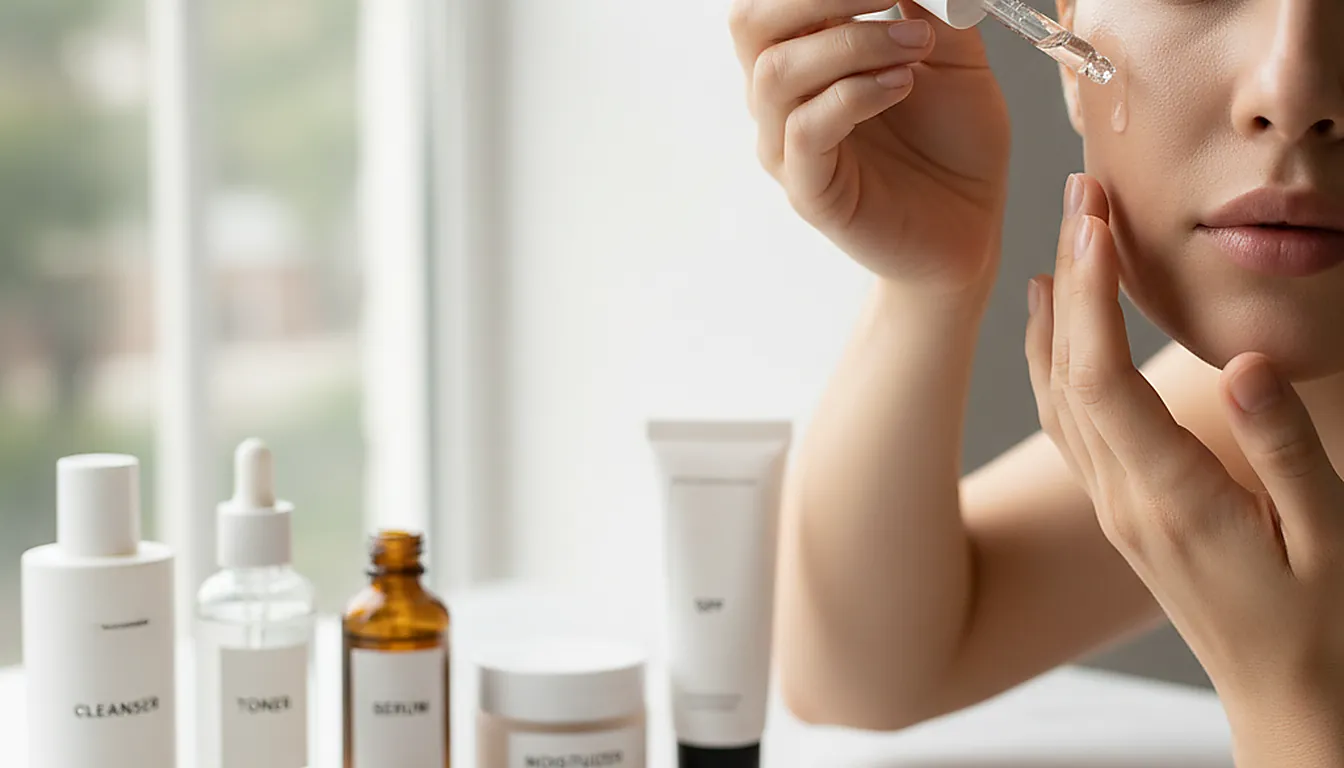
Never apply hyaluronic acid to dry skin. Mist your face generously with thermal spring water or pure rosewater first, apply two drops of serum, and seal within thirty seconds using a squalane or ceramide moisturizer to secure the moisture barrier.
The Bottom Line on Pure Hydration
Hyaluronic acid remains a magnificent skincare staple when understood and applied with physiological precision. Look for multi-molecular blends, respect environmental humidity, and always complete your routine with an occlusive shield for lasting, luminous hydration.