
Hey friends, let’s talk about something really important today: being trauma-informed. You might be thinking, “Trauma-informed? What’s that got to do with me?” Well, honestly, it has everything to do with all of us, especially when we’re trying to navigate our mental wellness journey. And trust me, we’re all on that journey, right?
Table of Contents
- What Does It Mean to Be Trauma-Informed?
- Key Principles of Trauma-Informed Care
- Why Is Being Trauma-Informed Important for Mental Wellness?
- Benefits of a Trauma-Informed Approach
- How Can You Become More Trauma-Informed?
- Educate Yourself
- Practice Self-Care
- Listen with Empathy
- Be Mindful of Your Language
- Set Boundaries
- Real-Life Examples of Trauma-Informed Practices
- The Road to Mental Wellness
I’m going to be real with you. I didn’t always understand what being trauma-informed meant. I thought it was something only therapists and social workers needed to worry about. But then, life happened. I went through a really rough patch a few years ago – a relationship ended, I lost my job, and my anxiety was through the roof. I was a mess, to put it mildly. It was during this time that I stumbled upon the concept of trauma-informed care, and it completely changed the way I understood myself and others. Learning to manage mental wellness can be difficult. Sometimes being gentle with ourselves is all we can do.
What Does It Mean to Be Trauma-Informed?
Okay, so what exactly *is* being trauma-informed? Simply put, it’s understanding that trauma is incredibly common and can affect people in all sorts of ways. It’s about recognizing the signs of trauma and responding in a way that avoids re-traumatization. It’s about creating a safe and supportive environment where people feel comfortable sharing their experiences, without judgment.
Think of it like this: imagine you’re walking through a field and there are hidden landmines. If you’re not careful, you could step on one and get hurt. Being trauma-informed is like having a map that shows you where the landmines are, so you can avoid them. It’s about being aware of potential triggers and responding with empathy and understanding. Developing good mental wellness habits can be a challenge.
Key Principles of Trauma-Informed Care
There are some core principles that guide trauma-informed practice. Understanding these can really help you apply this mindset in your own life, and in your interactions with others.
- Safety: Creating a physical and emotional environment where people feel safe and secure.
- Trustworthiness and Transparency: Being open and honest in all interactions, building trust through clear communication and predictable behavior.
- Peer Support: Recognizing the value of shared experiences and creating opportunities for mutual support and connection.
- Collaboration and Mutuality: Working in partnership with others, recognizing that everyone has something valuable to contribute.
- Empowerment, Voice, and Choice: Giving people a sense of control over their own lives and decisions, empowering them to make choices that are right for them.
- Cultural, Historical, and Gender Issues: Addressing biases and stereotypes. Acknowledging and honoring the unique experiences and perspectives of diverse groups.
Why Is Being Trauma-Informed Important for Mental Wellness?
Now, you might be wondering, why all this focus on trauma when we’re just trying to improve our mental wellness? The truth is, trauma can have a profound impact on mental health. It can contribute to anxiety, depression, PTSD, and a whole host of other challenges. If we’re not aware of the potential role of trauma, we might be missing a key piece of the puzzle.
For me, understanding the trauma I had experienced helped me to recognize patterns in my behavior. I realized that my anxiety wasn’t just some random thing; it was directly connected to past experiences. Once I made that connection, I was able to start working on healing those wounds and developing healthier coping mechanisms. It wasn’t a quick fix, believe me, but it was a huge step forward.
Benefits of a Trauma-Informed Approach
- Improved Relationships: You’ll develop better empathy and communication skills, leading to stronger and more meaningful connections with others.
- Reduced Stigma: By understanding trauma, you can help reduce the stigma surrounding mental health issues and create a more supportive community.
- Increased Self-Awareness: You’ll gain a deeper understanding of yourself, your triggers, and your own coping mechanisms.
- Enhanced Resilience: By addressing past trauma, you can build resilience and develop the skills to better navigate future challenges.
How Can You Become More Trauma-Informed?
Okay, so you’re on board. You see the value of being trauma-informed. But how do you actually *do* it? Here are a few practical steps you can take:
Educate Yourself
The first step is to simply learn more about trauma. Read books, articles, and blog posts (like this one!). Attend workshops or webinars. The more you know, the better equipped you’ll be to understand and respond to trauma.
Practice Self-Care
This might sound a little cliché, but it’s so important. Taking care of yourself – physically, emotionally, and mentally – will make you better able to support others. Plus, it’s just good for you! Think of it as putting on your own oxygen mask before helping others. I found that taking regular walks in nature really helped me to de-stress and clear my head. Exercise helps promote mental wellness in general.
Listen with Empathy
When someone shares their experiences with you, really listen. Put aside your own thoughts and judgments and just try to understand what they’re going through. Ask open-ended questions and validate their feelings. Remember, you don’t have to fix anything. Just being present and supportive can make a huge difference. Sometimes people just need to be heard.
Be Mindful of Your Language
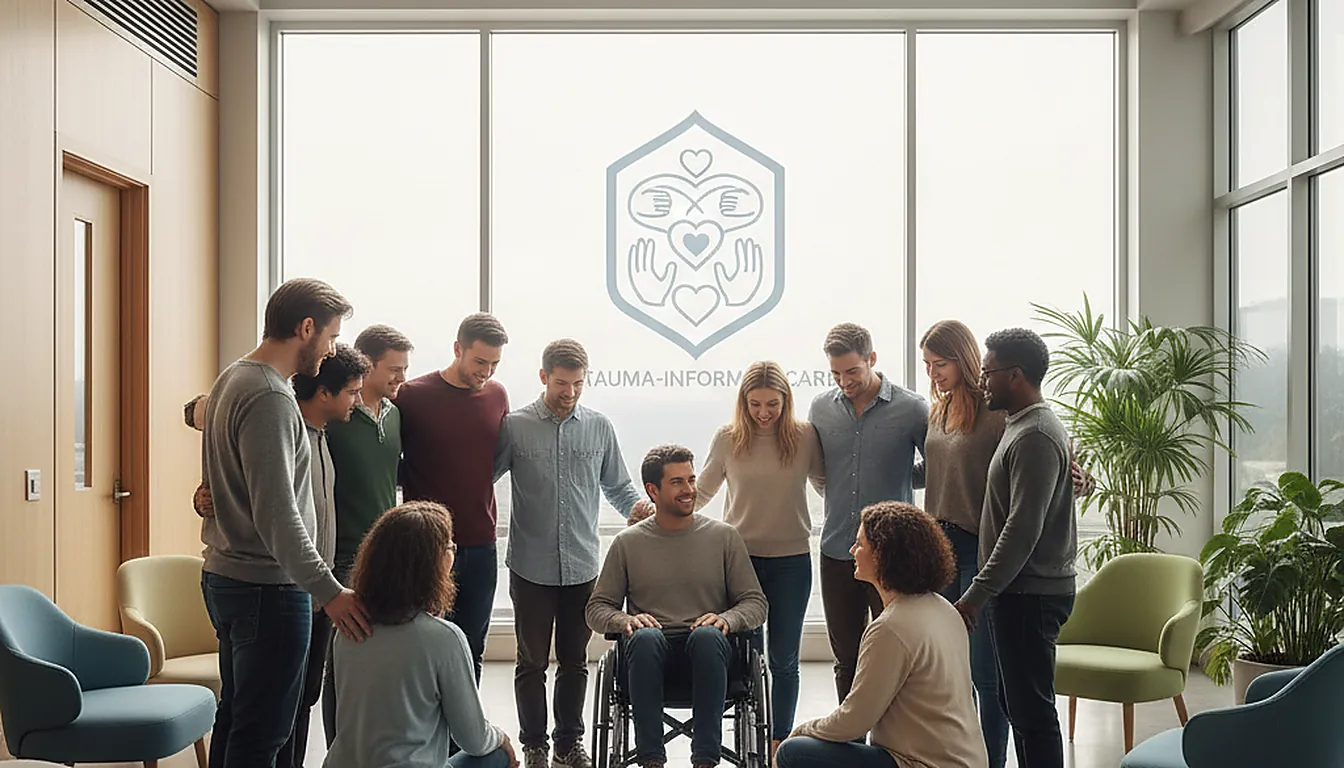
Here’s where it feels real for me.
Words matter. Be careful about the language you use, especially when talking about sensitive topics. Avoid making assumptions or generalizations. Use person-first language (e.g., “a person with depression” instead of “a depressed person”).
Set Boundaries
It’s important to set boundaries, both for yourself and for others. You don’t have to be everything to everyone. Know your limits and don’t be afraid to say no. Respect other people’s boundaries as well.
Real-Life Examples of Trauma-Informed Practices
To give you a better idea of what this looks like in practice, here are a few examples:
- In Schools: Teachers create a safe and supportive classroom environment where students feel comfortable sharing their feelings and experiences. They use positive discipline techniques instead of punishment, and they are mindful of potential triggers for students who have experienced trauma.
- In Healthcare Settings: Healthcare providers screen patients for trauma and provide trauma-informed care. They are mindful of the potential for re-traumatization during medical procedures, and they prioritize patient safety and comfort.
- In Workplaces: Employers create a culture of respect and understanding. They provide training on trauma-informed practices, and they are flexible and accommodating to employees who have experienced trauma.
Honestly, becoming trauma-informed is a journey, not a destination. It’s about constantly learning, growing, and evolving. It’s about being more compassionate, more understanding, and more human. And that, my friends, is something we can all strive for. Taking care of your mental health is important.
The Road to Mental Wellness
So, are you trauma-informed? It’s not just a label, but an ongoing process of learning, understanding, and acting with empathy. By integrating this understanding into your daily life, you contribute to a world that is more supportive and understanding, fostering better mental wellness for yourself and others. Remember my story. It takes time to overcome and recognize trauma. Don’t try to rush it. Start with small steps, but start today.
Frequently Asked Questions
What does it mean to be trauma-informed?
Being trauma-informed means understanding that trauma is widespread and can affect individuals in various ways. It involves recognizing the signs of trauma and responding in ways that prevent re-traumatization, creating a safe and supportive environment.
Why is being trauma-informed important for mental wellness?
Trauma can significantly impact mental health, leading to issues like anxiety, depression, and PTSD. Being trauma-informed helps in understanding these impacts, healing from past wounds, and developing healthier coping mechanisms.
How can I become more trauma-informed?
You can become more trauma-informed by educating yourself about trauma, practicing self-care, listening with empathy, being mindful of your language, and setting healthy boundaries.
What are some examples of trauma-informed practices in different settings?
Trauma-informed practices include creating safe classrooms in schools, providing patient-centered care in healthcare, and fostering supportive and understanding workplaces.
What are the key principles of trauma-informed care?
The key principles of trauma-informed care include safety, trustworthiness and transparency, peer support, collaboration and mutuality, empowerment, voice and choice, and addressing cultural, historical, and gender issues.
How can understanding trauma help improve my relationships?
Understanding trauma helps you develop greater empathy and communication skills, leading to stronger, more meaningful connections with others by fostering a more supportive and understanding environment.
Key Takeaways
- What Does It Mean to Be Trauma-Informed?
- Key Principles of Trauma-Informed Care
- Why Is Being Trauma-Informed Important for Mental Wellness?
- Benefits of a Trauma-Informed Approach
- How Can You Become More Trauma-Informed?